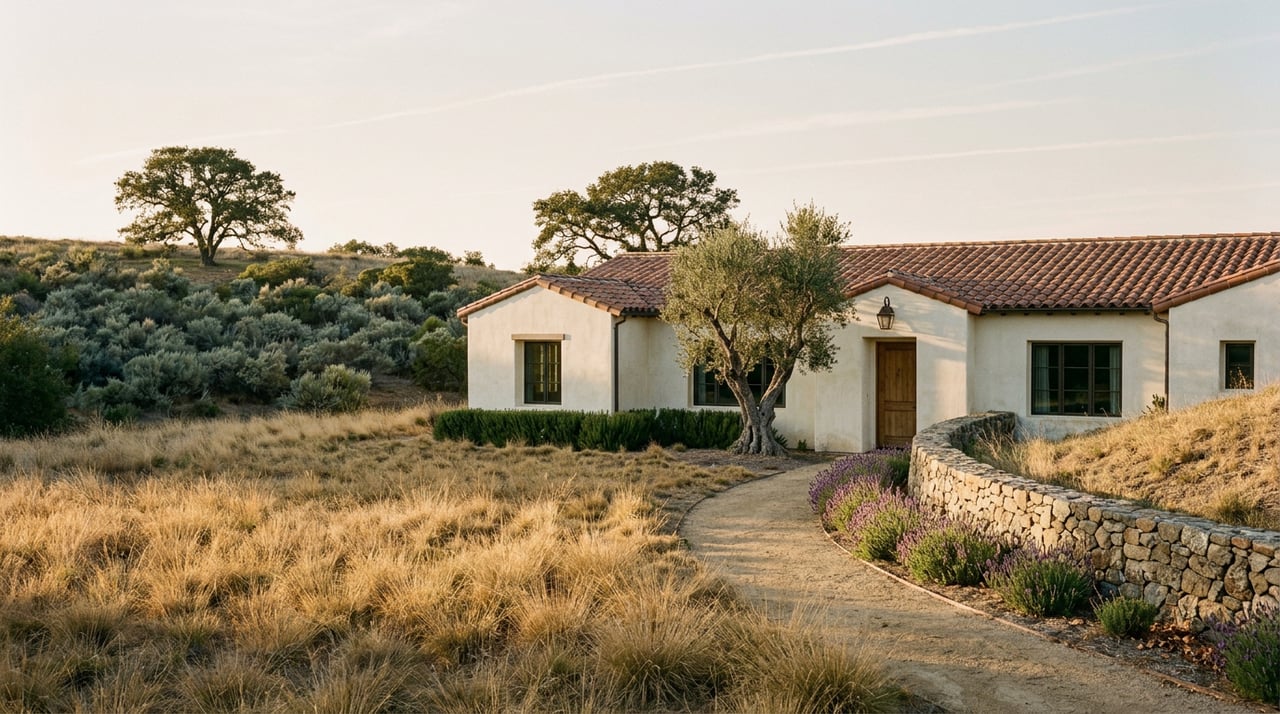
San Juan Capistrano Vacated a Horse Trail Easement That Never Actually Existed
September 3, 2026
September 3, 2026
Last August, the City of San Juan Capistrano quietly closed the books on a piece of paperwork that had outlived its own purpose for more than four decades. A property owner on Aguacate Road, along with several neighbors on Calle Roberto, asked the city to vacate an "equestrian purposes" easement that had sat recorded against their land since 1983. The city said yes, and the reasoning in its own staff findings is the part worth reading twice: the easement had never been built out as a trail, never connected to any public equestrian route, and was never maintained by the city at any point in its existence.
That easement had been offered for dedication back in 1977. For nearly fifty years, it existed as a line on a title report and nothing else. If you had bought one of those Aguacate Road or Calle Roberto parcels anytime in the last four decades, your preliminary title report would have flagged an equestrian easement, and you would have had every reason to assume it meant something. It didn't.
This is the thesis worth sitting with if you're shopping for a horse property in San Juan Capistrano: the word "equestrian" attached to a listing, a zoning map, or a title report tells you far less than it appears to. What actually determines whether you can keep a horse on a piece of land comes down to a zoning code, a setback measurement, and whether an easement connects to anything real on the ground. The Aguacate Road vacation is proof the city itself treats these designations as disposable the moment someone checks.
San Juan Capistrano's municipal code doesn't have a single "horse property" category. It has zoning districts, and only a handful of them carry the specific provisions that make horsekeeping and rural infrastructure legal: Agri-Business (A), Residential/Agriculture (RA), Hillside Residential (HR), Single-Family-40,000 (RSE-40,000), and Single-Family-20,000 (RSE-20,000). Those are the districts where the city's subdivision design standards allow rural streets, permit equestrian trails within the right-of-way, and open the door to private sanitation systems instead of a public sewer connection.
That last point matters more than it sounds. The city's own subdivision standards state that a private sanitation system can only be approved in those same districts, and only if no public sanitary sewer with sufficient capacity exists within 200 feet of the property. A soil report and percolation test from a licensed engineer has to recommend the septic system without exception before the city engineer will approve it. This is exactly why a listing for a lot on Spotted Bull can note, in the same paragraph touting horse trail access, that there's no sewer on the street and the neighboring homes run on septic. That's not a quirky footnote. It's the zoning district doing what it's supposed to do.
If a property sits outside those five districts, none of this applies, regardless of how much acreage it has or how the listing photos are framed. A three-acre lot in the wrong zoning designation can't legally support a stable no matter how much pasture it shows.
Even inside the correct zoning district, the city's equestrian standards ordinance draws a hard line around where a stable structure can actually sit. Under Municipal Code Section 9-3.515, structures used for horsekeeping have to maintain a minimum of 100 feet from any property zoned or shown on the general plan for residential use, and no paddock, box stall, or corral can sit within 100 feet of a school, hospital, or similar institution. Commercial stables require a Conditional Use Permit before they can operate at all, plus a landscaped buffer of at least fifteen feet along any residentially zoned or public street frontage, and a minimum five-foot buffer with trees, shrubs, and groundcover along every other property line.
Run that math against an actual parcel and the "usable" portion of an equestrian estate often looks nothing like the total lot size on the listing sheet. A property that borders residential zoning on two sides loses a 100-foot band along each of those boundaries before a single stall can be built. Combine that with hillside topography, which is common along the Ortega Highway corridor and the hills above town, and the flat, buildable footprint for a barn and turnout can end up a fraction of the advertised acreage.
The city applies this same 100-foot buffer logic even to smaller-scale animal keeping. A 2024 Conditional Use Permit application for four backyard beehives on Silver Creek Drive was required to maintain the identical 100-foot distance from any adjacent residential dwelling. The rule isn't specific to horses. It's the city's general framework for keeping animal uses away from neighboring homes, and it applies whether you're planning a six-stall barn or a hobby apiary.
San Juan Capistrano's best-known equestrian address is Hunt Club, a 24-hour guard-gated community of large-scale custom estates built specifically around horse trail access, with many properties zoned for horses and featuring private stables and riding rings. A short distance away sits Peppertree Bend, an ungated neighborhood that offers a similarly equestrian-oriented lifestyle on large lots without the gatehouse.
The difference between gated and ungated isn't just about privacy. Inside a gated, HOA-governed community, the association's Covenants, Conditions, and Restrictions sit on top of whatever the city's zoning code allows, and CC&Rs can be considerably more restrictive than the municipal code. An HOA can dictate the architectural style of a barn, limit riding hours, or in some communities prohibit livestock outright, even on a parcel where city zoning would otherwise permit it. A buyer who confirms the zoning district and the setback math but never pulls the recorded CC&Rs has only done half the work.
This same pattern shows up elsewhere in South Orange County. Nellie Gail Ranch in Laguna Hills and Bear Brand Ranch in Laguna Niguel are both large-lot, guard-gated communities, but they're organized around different amenities and different governing documents, which is exactly why a horse-specific due diligence checklist has to be run community by community rather than assumed from one gated neighborhood to the next.
None of this shows up by walking the property with a listing agent. It shows up in documents that most buyers don't think to request until an inspection contingency is already ticking.
Groups like the San Juan Capistrano Equestrian Coalition track trail conditions and connectivity across the city's network, which is a useful cross-check against what a title report claims a given easement provides.
Does every "equestrian zoned" property in San Juan Capistrano allow horses right now? Not automatically. The zoning district sets the ceiling for what's possible, but setback math, lot topography, and any recorded CUP requirements still have to pencil out on the specific parcel.
If a property has a recorded equestrian easement, does that guarantee trail access? No. The Aguacate Road and Calle Roberto easement existed on paper from 1983 until the city vacated it in August 2025 without it ever connecting to a built trail. An easement's existence and its usefulness are two separate questions.
Can an HOA restrict horsekeeping even if the property is zoned for it? Yes. Recorded CC&Rs in a gated or association-governed community can impose rules stricter than the city's zoning code allows, including architectural requirements for barns or outright restrictions on livestock.
Buying a horse property here rewards the kind of scrutiny most listings never invite. If you're weighing a parcel in Hunt Club, Peppertree Bend, or anywhere along the Aguacate Road and Ortega Highway corridor, Tony Salay Real Estate Group will walk the zoning, the setbacks, and the recorded documents with you before you're locked into an offer. Contact Us to talk through what a specific property actually allows.
Stay up to date on the latest real estate trends.

Whether you're buying, selling, or just exploring your options, Tony and Shelley bring decades of experience and local expertise to every conversation.
Tony Salay Real Estate Group
32356 S Coast Hwy Laguna Beach, CA 92651 Tony and Shelley Salay | CA DRE# 1964400 - 00828762 Pacific Sotheby’s International Realty | CA DRE# 01767484